

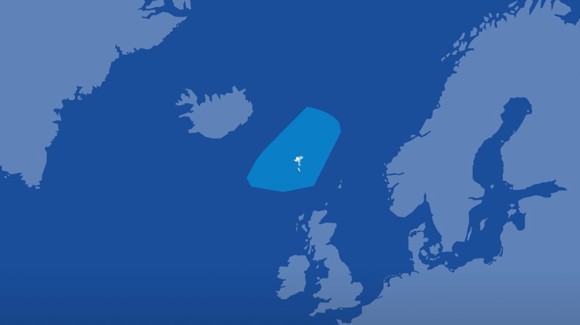
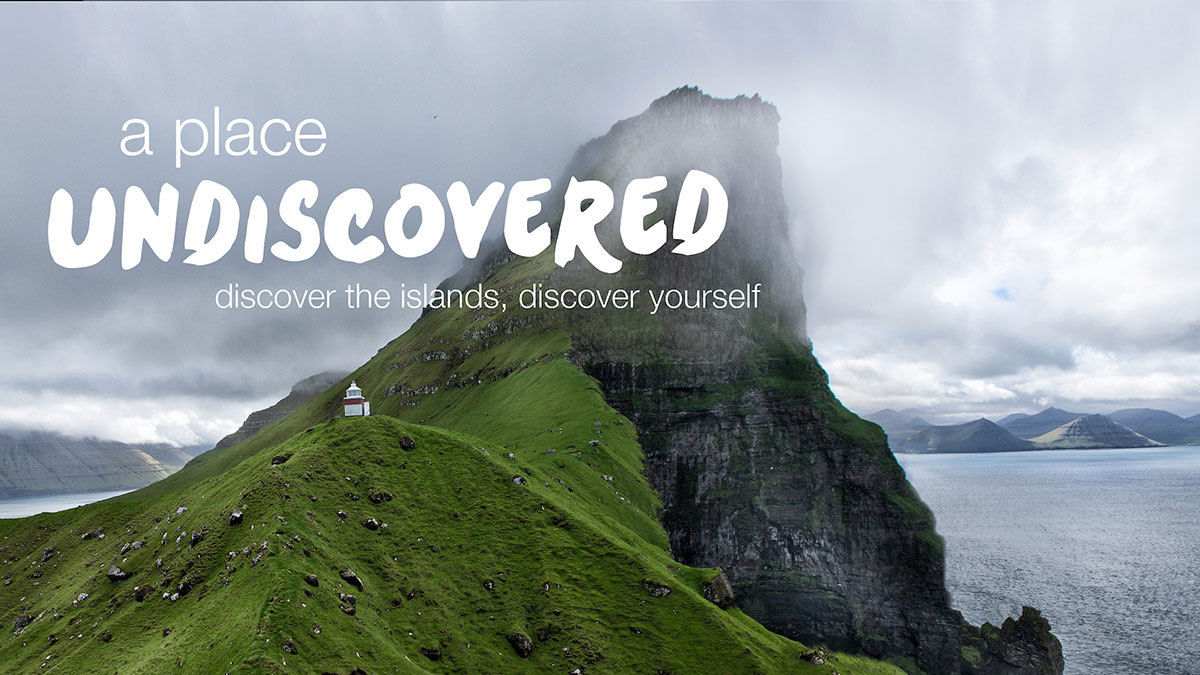
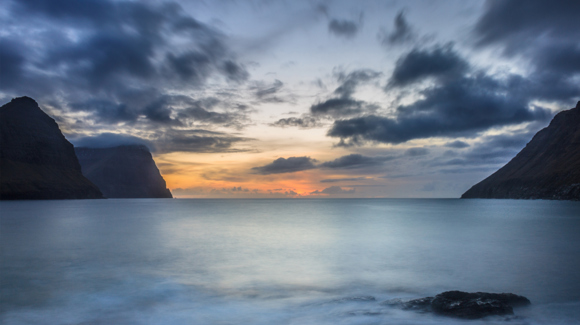
Located in the Northeast Atlantic, the Faroe Islands comprise 18 small islands, characterised by steep cliffs, tall mountains, narrow fjords – and a population of 50,000.
The Faroese language derives from Old Norse, which was spoken by the Norsemen who settled the islands 1200 years ago.
Through the centuries, the Faroese have defied the harsh nature and living conditions. Enduring today is a nation in which the living standard is one of the highest in the world. A highly industrial economy mainly based on fisheries and aquaculture continues to flourish, while a Nordic welfare model ensures everyone the opportunity to explore his or her own potential. Faroese maritime expertise is widely renowned and the Faroe Islands export seafood to all six continents.
Positioned strategically between Europe and North America, the Faroe Islands are only a couple of hours’ flight from the metropolitan centres in Northern Europe. Upon arrival, the scenery renders visitors a ravishing natural experience in a society with advanced infrastructure and digital networks.
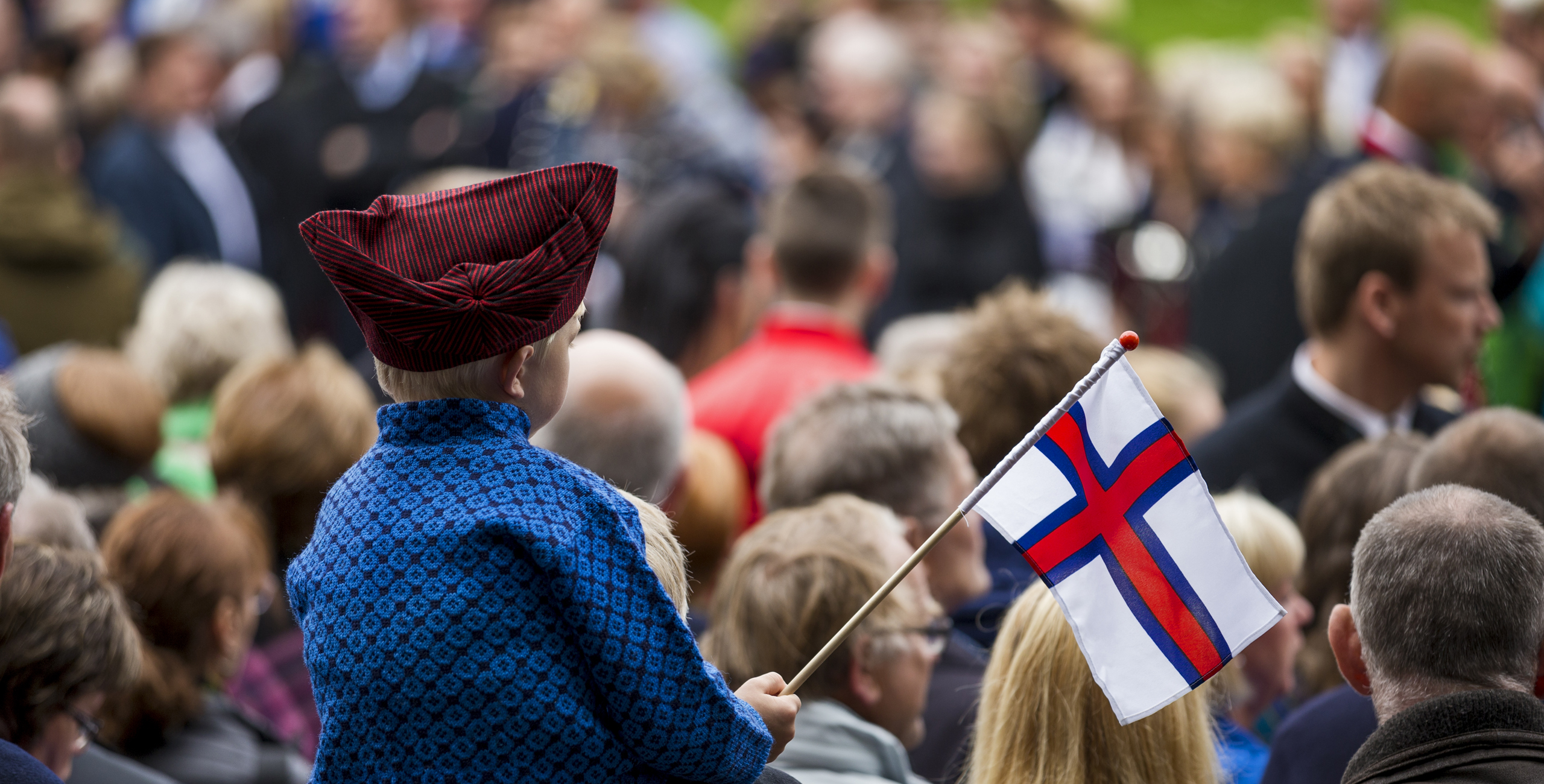
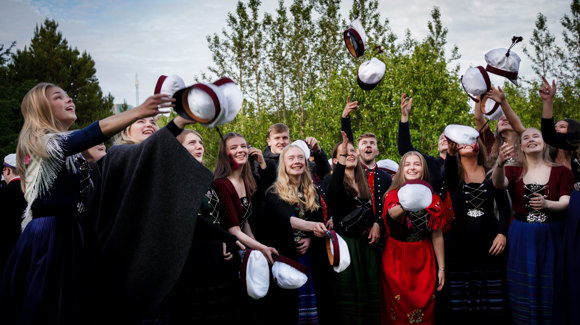
Centuries of relative isolation have resulted in the preservation of ancient traditions that to this day shape life in the Faroe Islands. The unique mixture of traditional and modern culture characterises the Faroese society, constituting a strong sense of local community and an active outlook as a globalized Nordic nation.
The Faroe Islands are a self-governing nation with extensive autonomous powers within the Kingdom of Denmark. The Faroese political system is a variation of the Scandinavian style of parlia-mentarian democracy, with a legislative assembly, the Løgting, and a government, Føroya Landsstýri, headed by the Løgmaður (Prime Minister).
Faroe Islands are an archipelago of 18 islands, covering a total land area of 1,399 square kilometres, a sea area of 274,000 square kilometres and a population of approximately 50,000.
The Faroese society is founded on the Scandinavian welfare model. Citizens and residents are entitled to a range of publicly financed services such as social security, healthcare and education.
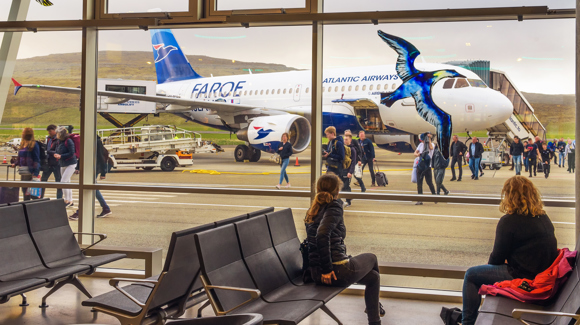
Faroe Islands have a highly advanced infrastructure in transportation and digital networks. There are regular ferry and cargo links to all neighboring countries. From Vágar Airport there are several daily flights and more than 10 different direct international connections.
Adrift in the whirling rhythmic North Atlantic Sea, a different world lingers. A place like no other on earth.
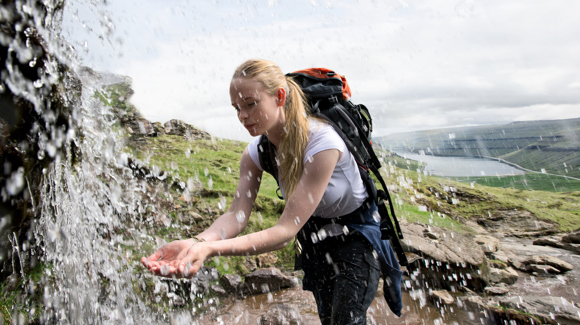
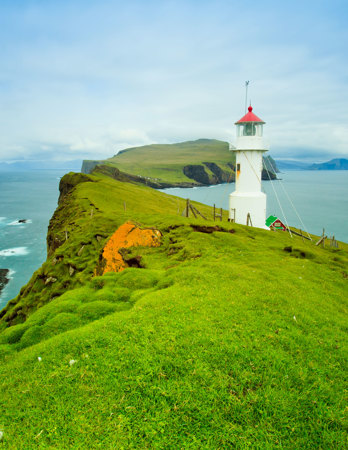
An idyllic escape, peacefully set among lush green valleys, imposing basalt cliffs and waterfalls plunging directly into the wind whipped ocean.
The 18 jagged volcanic islands resemble a handful of rocks scattered haphazardly in the deep-sea ocean. Home to mountains of myth, hobbit-like turf-roofed houses and grazing shaggy sheep, these islands make up the perfect playground for the senses.
With brilliant greens and blues in summer and icy white and silver in winter. With colourful villages sheltered between tall, majestic mountains, the islands offer dramatic scenery.
The Faroese population reached an all time high in April 2017 when the population passed 50.000.
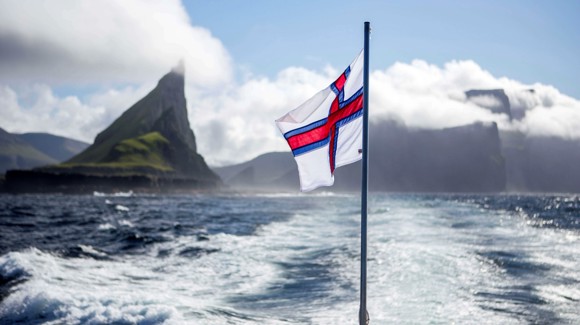
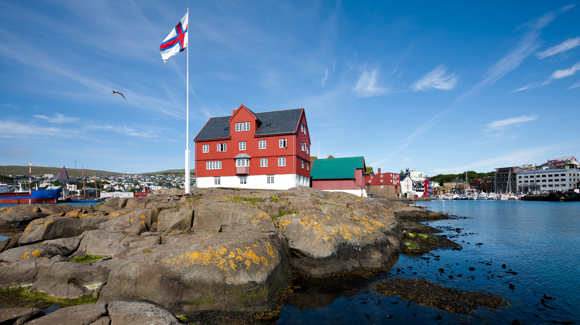
The flag of the Faroe Islands is called Merkið. The Faroese National Anthem is “Tú alfagra land mítt.” The Faroese national coat of arms, Veðrur, consists of a blue shield with a ram, a motive that dates back to the middle Ages.
Isolated, rainy and windy - but also quite content in terms of quality of life and life satisfaction. A study from the Faroese Institute for Public Health from 2017 from shows that living in the Faroe Islands is, in fact, “excellent”.
The marine ecosystems around the Faroe Islands are highly productive with a diversity and abundance of marine species.
Over the centuries the Faroese have developed the skills and expertise necessary to make the most of the valuable living resources of the North Atlantic around us.